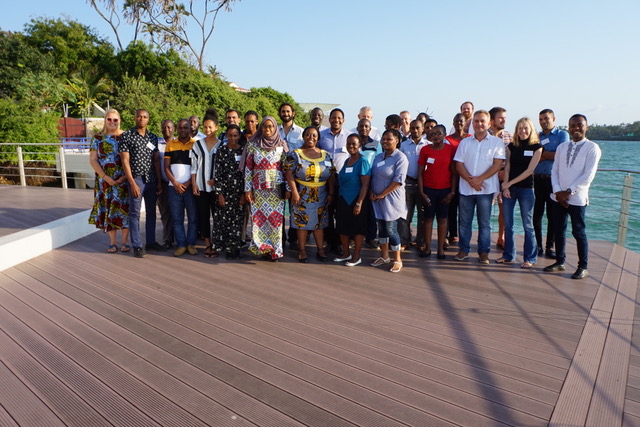
On 8 to 10 of October 2018 WIOMSA together with Lund University in Sweden hosted a regional workshop in Mombasa, Kenya.
There is widespread consensus among climate scientists today that global climate change is real and has anthropogenic roots. Marine species are exposed to a large array of stressors, such as warming and ocean acidification, that are linked directly to anthropogenic climate change. The general view on whether natural populations can adapt to anthropogenic change is that many species will fail to acclimatize to rapid climate change effects. An understanding of how species respond to changes associated with climate change is unfortunately not fully understood.
This workshop therefore, aimed to further our knowledge and specifically to:
The countries of the WIO region have prioritized climate change and its impacts and made commitments to address it through national and regional efforts. In June 2015, the Eighth Conference of Parties (COP 8) of the Nairobi Convention approved the Climate Change Strategy for the WIO region developed jointly by the Secretariat of the Nairobi Convention and WIOMSA. The Strategy provides a roadmap for the Nairobi Convention Secretariat together with contracting parties to address the impacts of climate change. Further, all the WIO countries are signatories of the Paris Agreement, whose central aim is to strengthen the global response to the threat of climate change and the ability of countries to deal with the impacts of climate change.
The new MASMA Programme, which started in February 2018, is designed to assist the countries of the region to implement the Paris Agreement and the Climate Change Strategy for the WIO region. One of the objectives of this workshop of furthering our knowledge on how marine species in the region are responding to rapid climate change is in line with the focus of the new MASMA programme and it is for this reason, WIOMSA teamed up with Lund University in organizing it.
We received a big number of applications to this workshop, confirming how important this topic is in our region. The final list of participants was a mix of researchers and experts representing a wide array of both government agencies and non-governmental institutions. During the selection of participants, we tried to have representatives from all countries in the region and we also strived to have a gender and age balance amongst the participants.
The workshop consisted of 4 keynote presentations and a total of 4 different sessions (coral reefs, seagrasses and mangroves, fish and climate change). The third day was dedicated to group discussions within the participants different areas of expertise.
The workshop was formally opened by WIOMSA Vice President Dr. Ranjeet Bhagooli. Dr. Bhagooli also took the opportunity to talk about the upcoming WIOMSA symposium to be hosted in Mauritius in July 2019. Dr. Bhagooli is the chair of the local organizing committee for this event.
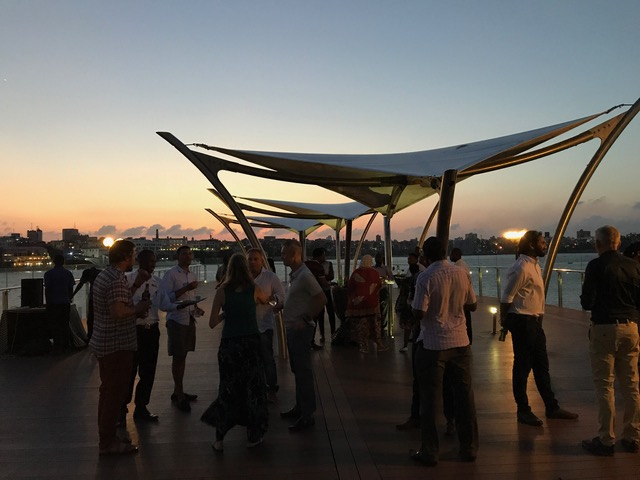
During the first day two keynote presentations were delivered – one from Dr. Ranjeet Bhagooli (University of Mauritius) on ‘Stress studies on corals from Mauritius’ and one from Dr. David Obura (CORDIO) on ‘Coral reef connectivity, future climate and vulnerability in the WIO. Applying the Red List of Ecosystems approach’. Other than the keynote presentations we had two sessions; one on coral reefs and one on seagrasses and mangroves. The first day was followed by a reception where the participants got more time for networking and to get to know each other.
The second day consisted of two keynote presentations – one from Dr. Johan Hollander (Lund University) on ‘Global warming effects across different trophic levels of marine species’ and one from Dr. Olof Hollander (World Maritime University) on ‘Climate change in the Ocean: current trends and what we can expect?’. The two sessions of the second day was on; Climate change and fish.
The third day was dedicated to group discussions. The groups were organized after area of expertise. The aim of the group discussions was to respond to the following questions:
The workshop was concluded with presentations from the 4 groups on the results from their discussions. These results will be communicated at a later date.
Overall a successful workshop with high quality presentations and valuable discussions on this important topic.